

5 Professional Organizer Secrets That Actually Work
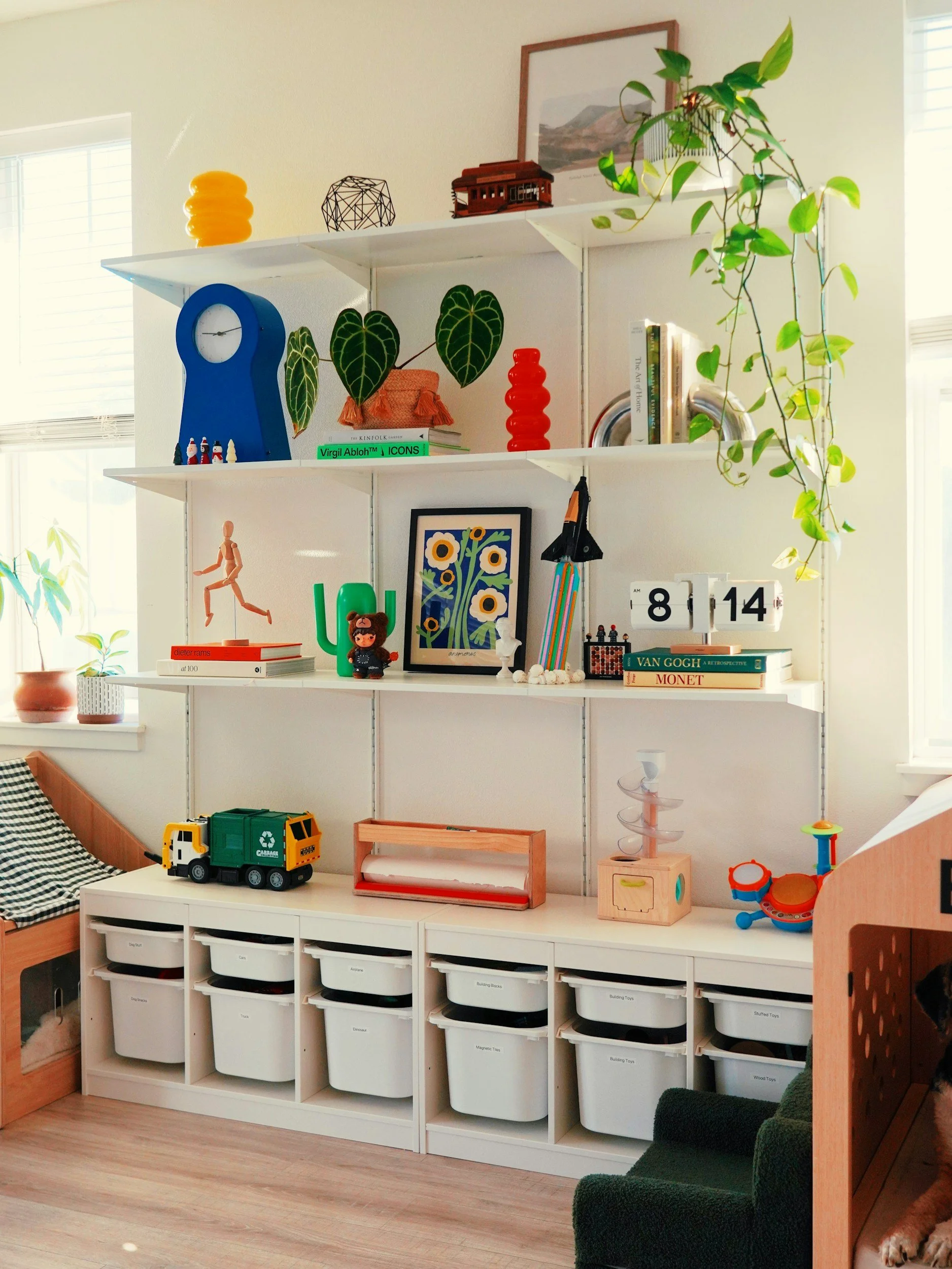
We’ve seen it all—overflowing closets, chaotic junk drawers, the “I’ll deal with it later” piles. And after hundreds of homes, we’ve collected a few secrets that always deliver. Here’s a very official peek behind the curtain:
1. Organize by Zone, Not Room
Spaces should be defined by their function.
This is a major issue we come across in nearly every home: no clear purpose for a space (or furniture).
Instead of letting a bookshelf or countertop collect a bunch of random items, define its purpose. Once a piece of furniture or small area of a room has an actual purpose, it is SO much easier to maintain a system, or know when it’s time to reset the area. Note that it doesn’t mean all your spaces will look perfect all the time–it will simply help you clearly identify when to tidy, what stays in that zone, and what needs to find a new zone.
Example zones:
Entry Zone - Often an entry console or built-in near your primary entrance that helps collect and stage incoming and outgoing items for the entire household. What goes here? It depends on how much space you have, and your household’s needs, but often includes the following:
shoes
jackets
sports gear
mail to be sorted
backpacks
purses
sunglasses
keys
Cooking Zone - You might prefer the area around your stovetop stays completely clear, but some home cooks prefer to keep handy items like:
frequently used cooking tools in a crock
frequently used cooking oil
salt + pepper
spoon rest (for dirty spoons to rest whilst cooking)
a clean kitchen towel
These are just a couple examples, and your zones fully depend on your life and what types of objects support your day-to-day existence. The important thing about zoning is committing to the zone category and the maintenance of that area.
2. Labels to maintain a system
Labels prevent decision fatigue and keep everyone on the same page. Especially for families and shared households– where many people need access to the same items, labels make it clear and easy for other people to find what they need. Labels are also important if you’re someone who forgets about that which is “out of sight, out of mind.”
Very visual people may prefer to have items in plain view, but most houses’ storage spaces are not designed this way and involved doors and drawers. Labels create that visual cue to remind you where to find, and also importantly return items to their intended homes.
3. Vertical Storage is Gold
When people say they don’t have enough storage space because their place is too small, we immediately look up. While square footage counts only two dimensions of space, we know that all homes actually are full of CUBIC footage, you just have to look up at all the wall space available. If you think UP, you’ll see all kinds of possibilities for wall-mounted shelving, hooks, freestanding shelves, additional closet rods, and more.
Another aspect of thinking vertically is standing items up on their smallest side, which promotes visibility and accessibility in many cases. Why are books stored standing up next to each other on shelves? Because on a shelf, you can easily see each book’s title AND access any book you’d like. This principle applies to so many other areas, and if you are able to create storage solutions that allow you to:
See all items with a quick glance
Easily access an item without having to move around other items
Verticality is often the answer–whether on a shelf, in a cabinet, in a drawer, or even in a box.
Common examples:
Papers:
We often see folks storing a big pile of papers in a bookkeeping box. Even if you simply turned that pile 90 deg and then did nothing more, you’d go from piles to “files.” When papers are upright, you can easily sift through them and find the relevant information and make less mess along the way.
Junk Drawers:
We say with confidence that 100% of unorganized people have at least one junk drawer (often several). These are drawers crammed with manuals in plastic sleeves, mail and envelopes folded in avant-garde angles, tangled up cords belonging to unknown devices, and free-range batteries rolling around in a wilderness of random crap. Don’t worry–as bad as we make it sound here, we actually LOVE your junk drawers. These are the spaces where a little TLC goes a long way. Take everything out. Remove the true junk and only keep useful items. Sort them into mini categories. Get drawer dividers. When you put things back, stand them up vertically within their sections. This process will leave you with so much more space and visibility of what you have. (PS, if an item can’t store vertically here AND blocks the view of other items, like paper, it should live somewhere else.)
4. A “Pending” Basket
Have one basket or tray for items awaiting action—returns, repairs, mail. Keeps clutter contained and visible so you’ll actually take care of it. The real trick here is to actually attend to the items in the “pending” basket every so often. Make the return or repair, pay the bill, cancel the subscription, etc.
If you’re thinking: what if my whole house IS the pending basket? This is when it would be the perfect time to make an appointment or speak with a professional organizer about taking care of your pending pile(s)! Book a free, 15-minute call with Organized For Good to turn your pending-pile home into a home with a pending-pile 🎉
5. The 15-Minute Reset Rule
At the end of each day, set a timer for 15 minutes and tidy up. If it feels overwhelming, focus on resetting a small zone rather than everything all at once.
Consistent resets beat marathon cleaning sessions every time. We know because we’ve done the marathons AND the resets in our own homes and in that of our clients’.
Once you complete the marathon (meaning creating zones and systems throughout your home), all you need to do to sustain those systems is to reset the space regularly. Small, steady actions are key!
These 5 pro hacks WILL keep your home peaceful (especially between visits with your professional organizer).
If you need or want some support implementing these strategies, book a session with Organized For Good. We’ll help you create sustainable systems that work for your space and life.
Schedule a free, 15-minute consultation
Or